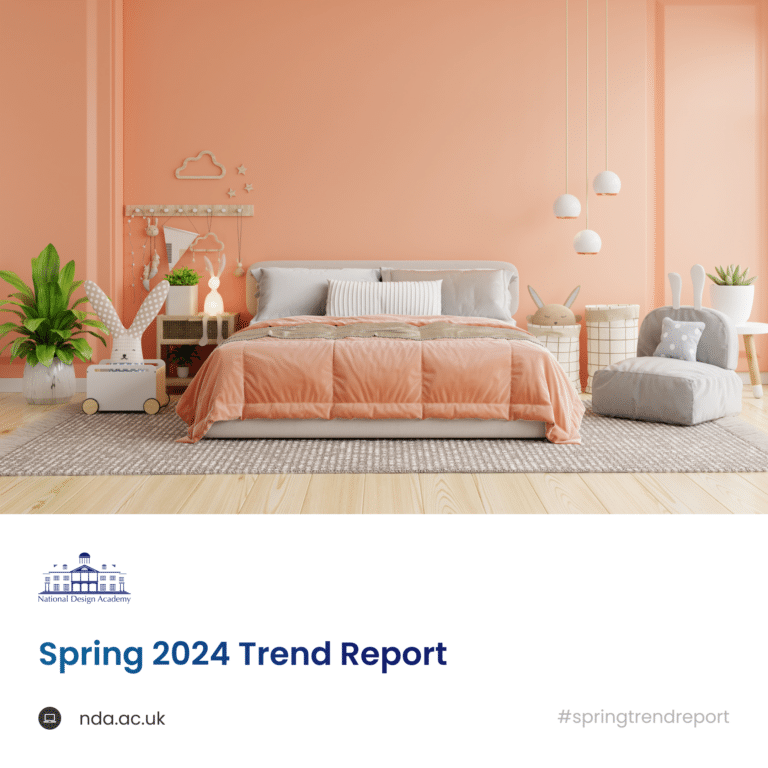
Foundation Degree (FdA) in Interior Design

Due to cuts in Government funding, course fees will increase from 1st September
Enrol Now To Beat The Increase!

An FdA is equivalent to years 1 & 2 of a BA Honours Degree (similar to a HND). However, the FdA is a separate degree qualification with a full cap and gown graduation ceremony. Students who graduate from the FdA may continue to study, through the NDA, for the BA (Hons) Interior Design and graduate again!

Enrol on this course

Enrol online or contact us for further information about this course

Telephone: 01159 1234 12 Email: enquiries@nda.ac.uk

Who should do this course?

Anyone who is serious about becoming an interior designer or seeking to work in design-related areas and who have relevant qualifications or experience. Mature students with extensive experience in the interior design profession can also receive recognition through this qualification.

If you have to juggle family commitments, full-time or part-time work and want the flexibility offered by studying part-time by distance learning, then this is the course for you.

Entry requirements

The following qualifications enable you to take the course:

  • NOCN Diploma in Interior Design or similar (all NDA Level 3 Diploma students are guaranteed a place on the course)
  • NOCN Diploma in Professional Curtain Making and Soft Furnishings (you may be required to complete one or two relevant modules to ensure the correct skill level for this course)
  • Successful completion of an Art Foundation Year
  • A Level in Art, Art & Design or similar
  • NVQ 3 in Art & Design
  • City & Guilds Interior Design or equivalent
  • An equivalent qualification
  • Suitable experience in the design profession

If unsure, please ring.

Where can I study & how long will it take?

You can enrol at any time! The FdA is studied part-time, by distance learning through our specially created Virtual Learning Studios (VLS) via the internet using your computer.  Here you can access thousands of links to interior design information, mail your tutor direct, meet new friends and keep in touch through the Student Forum.

Everyone is different; most students take between 2-3 years to complete the FdA. However, some students finish the course earlier and some take the maximum study time of 5 years.

What will I achieve?

  • Foundation Degree in Interior Design (FdA) awarded by Staffordshire University

This is a validated Foundation Degree, and on successful completion you will be able to use the initials FdA after your name, and will be invited to attend the graduation ceremony at Trentham Gardens, Staffordshire, on a date in July. All NDA Tutors attend the graduation and encourage all students to attend if they are able, as it's your day to be proud of your achievements!

Successful completion of this Foundation Degree will entitle you to a place on our BA (Hons) Interior Design, also validated and awarded by Staffordshire University - where you will be able to graduate again... with Honours!

When can I start?

You can enrol at any time and set your own start date.

Assessment

You will not have to take an exam! Your tutor will assess your assignments as you submit them throughout the course and your portfolio is moderated by a Staffordshire University External Examiner. The course assignments are mainly practical and will not involve extensive essay or thesis writing.

Each Module is self-contained, and has its own assessment, it has distinctive educational objectives and clearly defined content.

After my course

The FdA is equivalent to years 1 & 2 of a BA Honours Degree (similar to a HND). However, the FdA is a separate degree qualification with a full cap and gown graduation ceremony. It is particularly relevant to Interior Design as Foundation Degrees have a practical element and are designed to qualify you to work in the vocational area. Completing this course will really open up the world of interior design.

  • Study route - All students successfully completing the (FdA) are guaranteed a place on the BA Honours Degree. (This will take approximately 12-18 months part-time).
  • Career route - You can become a freelance designer, start your own practice or work as a qualified interior designer within an interior design or architectural practice. Other options include: interiors home staging, window display, show home design, design journalism, exhibition design, lighting design or retail buyer for interior related areas.  

As the BA Honours Degree is studied part-time, you can combine both study and career routes.

Course details

For the Foundation Degree, you will study 8 Modules. Each Module is worth 30 credits, making up the 240 credits required to earn the Foundation Degree in Interior Design (FdA).

Each Module should take approximately three months to complete, although there is some flexibility. If you are able to attend workshops this will help speed your progress.

Module 1 - Research Methods & Visualisation 1

Start your journey tracing the fascinating history of interior design. This Module will also show you the work of the world's best contemporary interior designers and provide you with all the research skills you will need.

Module 2 - Interior Design Principles 2

This Module develops your design communication, management and drawing techniques. You will examine inspirational examples of best practice from established designers to illustrate the importance of developing your own individual style.

Module 3 - Creative Lighting

Good lighting is fundamental to the success of an interior design scheme. In this Module, discover the enormous range of lighting products, manufacturers and design effects - the tools of any designer. Apply specialist lighting techniques to kitchen design.

Module 4 - Domestic Space in Historical Context 3

This Module looks at residential interior design through such fascinating influences as Elizabethan, Italian Renaissance, Baroque and many other historical movements and influences which continue to shape the society in which we live.

Module 5 - Design & Technology

Within an interior design scheme, it is often necessary to remove walls, enlarge windows and doors or raise/lower ceilings. This Module will help you to understand the requirements for planning consent. Responsible and sustainable design is an increasingly sector of the interior design market. We look at the differing, sometimes contradictory, approaches to ethical and ecological design.

Module 6 - Exhibition Design 4

We look at exhibition design, a fascinating and diverse sector of interior design. Projects can range from small trade exhibition stands promoting new designers or products to large public museums and private galleries of design/fine art.

Module 7 - Interior Design Professional Practice

The Module focuses on starting your own interior business and looks at the marketing and management of a professional interior design practice. You will learn how to accurately cost and select products, tender for jobs and produce a business plan with financial forecasts. You will have the opportunity to observe the NDA 'Private Clients' interior design practice.

Module 8 - Furniture & Furnishings

Furniture is often the most visible element of any interior design scheme. Explore the rich history of furniture and furnishings and become familiar with the major international suppliers, designers and manufacturers.  Textiles are also a highly visible component of an interior design scheme. Discover how textiles have been used throughout history both practically and ornamentally.

Interim Exit Awards

1  Certificate in Continuing Professional Development (CCPD)

2  University Certificate in Interior Design (UCID)

3  Certificate in Higher Education (CHE)

4  University Diploma in Interior Design (UDID)


Essential Equipment

  • Laptop, PC or Mac to access the course online via the VLS
  • Broadband internet connection
  • Internet browser: Internet Explorer 7 (or above) or Firefox
  • Digital camera

  • Drawing pen and pencil
  • Scale rule with 1:10, 1:20 and 1:50 scales (approx £8)
  • Adjustable set-square (approx £16)
  • Pastels, crayons, watercolours, etc.
  • A3 paper
  • A2 drawing board
  • Recommended reading book list

All books, non-electronic equipment & other recommended equipment is available in our online Art Shop at special student prices.